In Front Of Your Nose: An online PR blog

Andrew Bruce Smith of escherman on technology PR. And George Orwell. Mostly.

Bloggers and journalists needed for annual Glide survey

For the last few years, Glide Technologies (purveyors of the well known Online Press Centre product) have conducted an annual journalist survey to delve into the nitty gritty of what kind of information journalists want and how they want to receive it.  The Glide surveys have tended to stand out from other similar, run of the mill research efforts in this area – they actually do seem to come up with some valuable insights.

The 2009 survey is now getting underway – the key difference this year is that Glide is looking for input from both journalists and bloggers (sorry, no PR folk required).  I realise most hacks would rather poke their own eyes out rather than spend time on yet another bloody survey – but if the thorough approach of recent years is replicated again this time around, I’d say it is 15 mins well spent.

As an added incentive, everyone who helps by completing a survey will be entitled to enter a prize draw and a chance to win 2 bottles of Champagne –  3 sets up for grabs – and of course, everyone who takes part will receive a full copy of the results (naturally).

So if you are a journalist or blogger, feel free to go here to complete the Glide Technologies 2009 Media Survey. Go on. You know you want to.

Filed under: Digital marketing, Media, Web/Tech, digital pr, online pr ,

Jackenhack Awards 2009:The (unofficial) video

What do you get when you cram around 170 UK tech PR people into a small bar in London, ply them with booze and offer up the prospect of some cheeky mickey taking? Answer: The Jackenhack Awards 2009 which took place last Wednesday evening at The Dust Bar in Clerkenwell Road, London.  If the PR Week Awards are “the equivalent of the film industry’s Oscars”, the Jackenhacks are the Razzies. Due to the current economic climate, there was no official video record of the evening. So I took it upon myself to create an unofficial one.

Armed with a Flip HD video camera, a copy of iMovie and a spare 30 mins for some (very) rough editing, this is what I came up with. I’m sure with more time I could have come up with a very polished video – but that would probably be “off-message” for the Jackenhacks. Suffice to say there is plenty of footage that didn’t make it into this version. If people were really that interested, I might be motivated to create an extended documentary.

Parental advisory warning: normally smooth talking PR people can be heard to be swearing in a way which makes Malcolm Tucker look like a recently ordained vicar. Those of sensitive dispositions should watch with the sound turned off.

Filed under: Technology PR, Web/Tech, digital pr, tech pr ,

How do you distribute and monitor social media guidelines?

Strict businessmanMore and more organisations are looking to draw up social media guidelines. As I’ve previously pointed out, many larger companies have already put in place policies relating to blogging and social network participation. However, it occurred to me there is not much discussion around the subject of distributing, monitoring and enforcing social media guidelines. Having a written social media usage policy is clearly a necessary first step. But how do you make sure people have seen these guidelines? More importantly, how do you know that they have actually read and understood them? And are aware of the consequences of failing to abide by them? (Take Cisco for example: “Please be aware that violation of this policy may result in disciplinary action up to and including termination.”)

Perhaps social media might be able to learn something from the world of IT security. There are already tools that allow businesses to readily distribute and monitor IT security policy, as well as educate employees. So why not for social media guidelines?

What do people think?

Filed under: Digital marketing, IT security, Technology PR, digital pr, online pr, tech pr ,

Does your PR agency really understand Page Rank? A client checklist.

Talking to various people over the last weeks, it is clear that a small but growing number of PR firms are attempting to use Page Rank as a metric for measuring the value of online media coverage.  However, it seems that some either don’t really understand what Page Rank is – or are misleading clients over the real Page Rank (and value) that their coverage has delivered.

For example, I’ve been told of a few firms who if they gain a piece of client coverage on, say, Computing’s web site, will claim that the value of the coverage is Page Rank 6.  However, what they really mean is that the Computing home page has a Page Rank of 6 – the actual page where the coverage appeared will almost certainly have a Page Rank of 0. That’s a mighty big difference.

In fact, almost all press coverage (or indeed any new web page) will have a Page Rank of 0 to begin with. Any new page added to a site will first have to be indexed by Google. And it takes Google time to take account of factors that will determine what Page Rank should be assigned. It is certainly possible to get Page Rank up to 1 0r 2 relatively quickly if people begin linking to the coverage  - but unless you get some very high Page Ranked backlinks rapidly, the chances that a piece of coverage will have gained a Page Rank of 5 or higher in the space of a few days is highly unlikely.

Traditionally, gaining a piece of coverage on a major site like the BBC would be cause for celebration. And I’m not saying it shouldn’t still be. However, we need to be honest about what value that might really deliver. And why we need to be careful about using Page Rank as a PR metric.

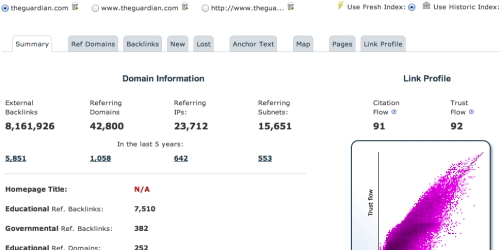
For example, the Guardian has a massive 3.8 million unique visitors and 130 million page views per month in the UK alone. Some PR firms might be tempted to say that getting coverage on The Guardian site provides an OTS (opportunity to see) of 3.8 Million. Of course, this is not exactly the case. The Guardian has roughly 20.3 million indexed pages – not of all of these are going to be editorial pages, but most will be. Fact is, not all pages are equal. Only the publishers themselves know the real data, but I’d hazard a guess that a smaller percentage of the total number of indexed pages gain the majority of site traffic. That’s the same for any website.  The challenge with using Page Rank as a PR metric is that it is an indirect measure of traffic. If you think about it, if Google determines that a page has a higher relative importance than another then it is likely to have more traffic. In which case, try randomly sampling some pages from the BBC and other major sites and you’ll probably find that the Page Rank is o.

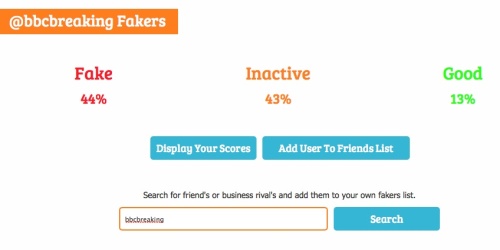
Here is another example. This story was one of the Most Popular on the BBC site a few days ago. However, it has a Page Rank of 0. In spite of 49 backlinks, including backlinks from pages with rankings of 7. Now the Page Rank may change over time, but again, this is unlikely unless further interest is generated via additional backlinks.

That’s not to say that over time, an article might not be able to build a higher Page Rank. But how many PR firms do you know that would recommend and implement an ongoing “merchandising” strategy to try and generate more backlinks and comments to a piece of coverage in order to improve Page Rank? Or would be able to track changes in Page Rank over time and demonstrate what factors may have caused that change in Page Rank? And have a plan for using that change in Page Rank to generate further traffic to the client’s website? (Disclosure: this is a standard approach at escherman)

The traditional PR mindset is one that says once a piece of coverage has appeared, the job is pretty much done (other than to prepare a clippings book and invoice the client). Part of the opportunity with online PR is that generating the initial coverage can in fact be the start rather than the end of the process.

So beware of PR firms touting Page Rank as a metric. Here’s a handy quick checklist of things to ask them:

1. Explain what Page Rank is and why it is important. Hint: go here to find out for yourself.

2. If a PR firm claims a high Page Rank for a piece of coverage that has appeared in the last 2 days, ask them to explain what factors have caused this to be the case.

3. Ask them if they have a plan for potentially improving the Page Rank of a piece of coverage – and how they would track that over time

Filed under: Digital marketing, Technology PR, Web/Tech, digital pr, online pr, tech pr ,

How to Give a Lousy Presentation: BusinessWeek

9. Don’t bother with a backup plan. If you need a live Internet connection to demo a site, don’t bother making a screen shot of the site in case the connection doesn’t work. That way, you’ll be at a complete loss for words when the connection fails.

10. Don’t practice. At all. Practicing a presentation out loud takes work and will make you look far too polished. Just wing it.

Good check list – points 9 and 10 in this BusinessWeek piece struck a chord

Filed under: Uncategorized

For Teens, Has Texting Replaced Talking? – The Juggle – WSJ

“My son had racked up nearly 2,000 incoming text messages, and had sent nearly as many. That means he was having more than 60 two-way communications via text message every day.” Sue Shellenbarger

Filed under: Uncategorized

The Top 100 UK tech folk to follow on Twitter: Pocket-lint

UPDATE ON UPDATE: To make even more clear I’m not simply reposting and attempting to claim all the glory, you’ll have to go to the Pocket-lint site for the full list.
UPDATE: Just so everyone is clear, this is NOT my list, I’m simply reposting – this is the list from the original Pocket-lint post here.  As Richard (see comments below) pointed out, there was no link to the original article – my apologies – it’s there now.
The Top 100 UK tech folk to follow on Twitter 0

3 September 2009 10:00 GMT / By Dan Sung

Twitter’s a pretty big yard these days. So, with no time to go chasing wild geese around, your friendly neighbourhood Pocket-lint has compiled a list of the finest geek minds and microblogging wordsmiths in the UK that you should follow for all things tech.

Without further ado, in no particular order and by their own bios, here are the top 100 tweeters you should be following.

A

@AlmostZara – Zara Rabinowicz writes about technology and beauty and likes gadgets, gaming and frozen yogurt. She is Staff Writer for Stuff Magazine.
@alexfarber – i like news and booze.
@andylim – Half Chinese, half Spanish Londoner. Editorial director @recombu – I love mobile phones like I love air. Founder UKTJPR.com and @UKTJPR.
@adamhleach – tech analyst, photographer and londoner
@asimqureshi – Consumer Technology PR – anything that makes life that bit more simple and pleasurable!!
@alanburkittgray – Editor of Global Telecoms Business magazine. See burkitt-gray.com for other links

Filed under: Uncategorized

Newspaper people on Twitter – Media UK

Newspaper people on Twitter

We list the “top of the twits” for newspaper titles (a-z) and people (a-z). Media UK runs a variety of services on Twitter too – not least, @mediauk – follow us!

Followers Following Ratio
1.

Jemima Kiss: Journalist, The Guardian

13,604 298 2.2%
2.

Charles Arthur: Journalist, The Guardian

8,684 496 5.7%
3.

Jack Schofield: Journalist, The Guardian

6,618 876 13.2%
4.

Emily Bell: Journalist, The Guardian

4,642 304 6.5%
5.

Bobbie Johnson: Journalist, The Guardian

4,411 895 20.3%
6.

Tim Bradshaw: Journalist, Financial Times

4,106 1,350 32.9%
7.

Shane Richmond: Journalist, The Daily Telegraph

3,464 1,177 34.0%
8.

Joanna Geary: Journalist, The Times

2,611 760 29.1%
9.

Ian Douglas: Journalist, The Daily Telegraph

2,237 1,958 87.5%
10.

Ruth Gledhill: Journalist, The Times

2,034 1,965 96.6%
11.

Chris Nuttall: Journalist, Financial Times

2,022 128 6.3%
12.

Toby Harnden: Journalist, The Daily Telegraph

1,825 425 23.3%
13.

Steve Wollaston: Digital Editor, Sunday Mercury

1,727 1,902 110.1%
14.

Harry Wallop: Journalist, The Daily Telegraph

1,690 207 12.2%
15.

Jo Wadsworth: Journalist, The Argus

1,562 1,920 122.9%
16.

Sarah Hartley: Journalist, Manchester Evening News

1,502 348 23.2%
17.

Gideon Rachman: Journalist, Financial Times

1,465 30 2.0%
18.

Alison Gow: Journalist, Liverpool Daily Post

1,440 493 34.2%
19.

Marc Reeves: Editor, The Birmingham Post

1,407 942 67.0%
20.

Claudine Beaumont: Journalist, The Daily Telegraph

1,298 277 21.3%
21.

Justin Williams: Journalist, The Daily Telegraph

1,202 476 39.6%
22.

Will Lewis: Editor, The Daily Telegraph

1,078 52 4.8%
23.

Sarah Ebner: Digital Editor, The Times

892 830 93.0%
24.

Michael Bailey: Journalist, Norwich Evening News

809 1,511 186.8%
25.

Samantha Shepherd: Journalist, Daily Echo

753 390 51.8%
26.

Anna Arco: Journalist, The Catholic Herald

750 738 98.4%
27.

Tom Scotney: Journalist, The Birmingham Post

736 470 63.9%
28.

Luke Coppen: Editor, The Catholic Herald

707 597 84.4%
29.

Sarah Booker: Digital Editor, Worthing Herald

689 847 122.9%
30.

Paul Cockerton: Digital Editor, Lancashire Telegraph

597 586 98.2%
31.

Jon Swaine: Journalist, The Daily Telegraph

508 112 22.0%
32.

David Ottewell: Journalist, Manchester Evening News

466 215 46.1%
33.

Martin Beckford: Journalist, The Daily Telegraph

463 139 30.0%
34.

David Maclean: Journalist, The Shields Gazette

445 119 26.7%
35.

Simon Donohue: Journalist, Manchester Evening News

417 376 90.2%
36.

Jane Perrone: Journalist, The Guardian

386 164 42.5%
37.

Edward Roussel: Journalist, The Daily Telegraph

382 53 13.9%
38.

Ian Wylie: Journalist, Manchester Evening News

370 102 27.6%
39.

Kat Brown: Journalist, thelondonpaper

287 182 63.4%
40.

Jon Welch: Journalist, Eastern Daily Press

265 241 90.9%
41.

Matt Cornish: Editor, St Neots News & Crier

238 306 128.6%
42.

Sam Blackledge: Journalist, Surrey Advertiser

223 332 148.9%
43.

Iain Hepburn: Digital Editor, Daily Record

222 317 142.8%
44.

Dan Kerins: Journalist, Southern Daily Echo

192 158 82.3%
45.

Amar Singh: Journalist, London Evening Standard

185 235 127.0%
46.

Jonny Fordham: Journalist, Reading Evening Post

178 77 43.3%
47.

Martin Smith: Journalist, Coventry Telegraph

174 71 40.8%
48.

Steve Dyson: Editor, Birmingham Mail

166 7 4.2%
49.

Jonathan Barnes: Journalist, Ipswich Evening Star

135 146 108.1%
50.

Murray Kelso: Digital Editor, Worcester News

119 62 52.1%
51.

Kevin Ward: Editor, Worcester News

118 64 54.2%
52.

Tony Larner: Editor, Sunday Mercury

116 94 81.0%
53.

Carolyn McCall: Editor, The Guardian

116 38 32.8%
54.

Vicki Kellaway: Journalist, Liverpool Echo

95 181 190.5%
55.

John McKie: Columnist, Daily Record

93 111 119.4%
56.

David Brookes: Editor, Coventry Telegraph

92 18 19.6%
57.

Maria Breslin: Station Manager, Liverpool Echo

81 11 13.6%
58.

Tristan Harris: Editor, Bromsgrove Standard

65 61 93.8%
59.

Miriam Phillips: Journalist, Dorset Echo

64 107 167.2%
60.

Chine Mbubaegbu: Journalist, Reading Evening Post

60 69 115.0%
61.

Martin Hamer: Digital Editor, Lancashire Evening Post

55 47 85.5%
62.

Steve Carley: Journalist, Worcester News

50 9 18.0%
63.

Tim Nixon: Journalist, Lancashire Telegraph

26 34 130.8%
64.

Rob George: Journalist, Bromsgrove Standard

19 43 226.3%
65.

Kate Whiteside: Digital Editor, The Westmorland Gazette

6 14 233.3%

Interesting to note that The Guardian occupies the top 5 slots!

Filed under: Uncategorized

Social Media Guidelines: MIchael Gerrard – IDC

I’ve posted a couple of blogs recently about the rise of the social media function and how BtoB companies can best leverage social media. A common theme has been the need for marketing to provide guidance, guidelines and infrastructure without stifling the power of this new channel to reach customers, prospects and influencers. To help with your journey, I’ve included below a list of social media guidelines that several companies have published:

  • Cisco: http://blogs.cisco.com/news/comments/ciscos_internet_postings_policy/
  • Dell: http://www.dell.com/content/topics/global.aspx/policy/en/policy?c=us&1=en&s+corp&~section=019
  • Mayo Clinic: http://sharing.mayoclinic.org/guidelines/for-mayo-clinic-employees/
  • BT: http://richarddennison.files.wordpress.com/2009/04/bt-social-media-guidelines-mar09.pdf
  • eBay: http://ebayinkblog.com/2009/03/06/new-social-media-guidelines-for-reporting-company-information/
  • HP: http://www.hp.com/hpinfo/blogs/codeofconduct.html
  • IBM: http://www.ibm.com/blogs/zz/en/guidelines.html
  • Intel: http://www.intel.com/sites/sitewide/en_US/social-media.htm
  • SAP: http://www.sapweb20.com/blog/2009/07/sap-social-media-guidelines-2009/#
  • Sun: http://www.sun.com/communities/guidelines.jsp
  • Have any others to share?. . . Please comment below.

    Filed under: Uncategorized

    8 email statistics to use at parties

    If email was a country, its 1.4 billion users would make it the largest in the world. Bigger than China, bigger than the populations of the USA and European Union combined.

    tick247 billion emails are sent each day. That’s one email every 0.00000035 seconds.

    tickIn the time it takes you to read this sentence, some 20 million emails entered cyberspace.

    tickEvery second, the world’s email users produce messages equivalent in size to over 16,000 copies of the Complete Works of Shakespeare (assuming a 30KB average email size).

    tick13.4 billion: the number of direct marketing dollars forecast to go on email in the US in 2009.

    tick$583 billion: the return from that investment if you use DMA figures on email marketing ROI. That’s four times the market value of Microsoft.

    tick181: the number of marketing emails it would take to produce enough revenue to buy one share in Microsoft.

    tick83,689,738,832,367: the number of marketing emails it would take to produce enough revenue to pay the US National Debt.

    [Aside 1: When you see email stats like the above, you gain a new appreciation for the work of those companies and organizations managing email.]

    [Aside 2: And when you consider that many of these emails are spam, you can understand why ISPs and others have bigger problems to worry about than whether legitimate marketing email is reaching the right destinat

    Filed under: Uncategorized

    Andrew Bruce Smith on Twitter


    December 2009
    M T W T F S S
    « Nov    
     123456
    78910111213
    14151617181920
    21222324252627
    28293031  

    RSS LastFM recently played tracks

    RSS PR Week – Technology PR news

    RSS Online PR and Social Media (via Econsultancy)

    • Social Media: who can show us the real value? December 8, 2009
      Imagine logging into your email every Monday morning to find a report clearly outlining the value derived from all the time, effort and resource you’ve expended on the social web. That would be nice wouldn’t it? Seeing what impact of all that faffing about in Facebook; Twitter twaddling and blog blabbing has done for your brand would be invaluable. But what […]
      Karl Havard
    • Q&A: Xenios Thrasyvoulou of PeoplePerHour.com December 8, 2009
      How does PeoplePerHour.com work? It's an online marketplace which, mainly small, businesses can use to outsource work to a thriving community of self-employed freelancers, or people with micro-businesses, perhaps working from home.This outsourcing is facilitated through the site; we help businesses to find the right freelancer for the work, and follow i […]
      Graham Charlton
    • Dell reaches $6.5m sales via Twitter December 8, 2009
      While the original @DellOutlet Twitter account was revealed in June to have generated $3m for the company, the growth of revenues outside of the US is also impressive.  The Canadian @DellHomeSalesCA account has generated $150,000 in less then a year, while in just seven months, the Brazilian equivalent (@dellnobrasil) has driven $800,000 in sales. Dell also […]
      Graham Charlton
    • MPs as brands: does name-recognition matter? December 7, 2009
      Using Twitter I sent messages to a handful of MPs and PPCs who have active accounts. Many chose not to reply (perhaps an indicator that they're not doing a good job) but a few did. Most notably, Labour civil service minister Tom Watson replied: This position was that in the long run, name recognition amongst his constituents is less important than advoc […]
      Ben LaMothe
    • Social media measurement: a 10-step guide December 4, 2009
      Step one Read my article on social media measurement to understand that social optimisation is really all about the bigger picture: satisfaction, engagement, loyalty and ultimately profits. The past decade has been largely about customer acquisition, whereas the next one will shift towards retention. Social optimisation strategies will certainly help you to […]
      Chris Lake
    • Mobile site review: Twitter December 4, 2009
      The look of the new mobile site is a big improvement on the previous version, and now matches the look of the desktop site: Tweets are easier to read now, and most useful of all is the addition of tabs towards the top of the page so you can switch between mentions, direct messages etc. Towards the foot of the page, you can see an update of your status, as we […]
      Graham Charlton
    • Virgin Media's customer service / Twitter fail December 3, 2009
      I first tried to get on to their website on my iPhone and find out if there were any major regional or national faults that may be causing the problem. The website can be a pain at the best of times, but it let me and plenty of other customers down when it could have been useful. This is the message I got when accessing the faults status page: It did provide […]
      Graham Charlton
    • Customer Engagement Report 2010 December 3, 2009
      This is the fourth annual Customer Engagement Report, produced in association with cScape. This is the most comprehensive and influential report available on customer engagement, and features expert commentary from the likes of Andy Beal, Jim Sterne, Eric T. Peterson, Ron Shevlin, Martha Russell, BJ Fogg and Ian Jindal. The research is useful for those who w […]
      Econsultancy
    • Q&A: Maura Curtin, Social Media Advertising Consortium December 2, 2009
      Q: Tell me about how SMAC came into being.     A: Tom Gerace, the CEO of Gather.com, and who also founded BeFree, it was his initiative. Working on the publishing side of the business he saw that agencies, publishers and brands needed a common business structure to work in this new world of social media. He talked with a number of people who became part of t […]
      Rebecca Lieb
    • 16 social media guidelines used by real companies December 2, 2009
      IBM Don't pick fights, be the first to correct your own mistakes, and don't alter previous posts without indicating that you have done so. Try to add value. Provide worthwhile information and perspective. IBM's brand is best represented by its people and what you publish may reflect on IBM's brand. Speak in the first person. Use your own […]
      Chris Lake

    RSS Online PR

    RSS PR Week Community

    • Toy firm seeks to reassure parents over hamster toys following safety fears December 8, 2009
      The UK distributors behind the children's toy rocked by claims that it is poisonous has sought to reassure parents that its products are safe.Read: Toy firm seeks to reassure parents over hamster toys following safety fears.
      PR Week
    • Tiger Woods' image 'not damaged in the long term', say sports PR experts December 4, 2009
      Sports PR experts have said they believe Tiger Woods' reputation will not be damaged in the long term following scandalous revelations about his private life being made public.Read: Tiger Woods' image 'not damaged in the long term', say sports PR experts.
      PR Week
    • Shamed NHS trusts in PR fightback following Dr Foster report December 3, 2009
      NHS trusts media crisis How the worst-performing NHS trusts in Dr Foster report responded.Read: Shamed NHS trusts in PR fightback following Dr Foster report.
      PR Week
    • Centrica website named best in UK for CSR comms December 3, 2009
      Centrica, owner of British Gas, has come out top in an audit of a CSR communications of the FTSE 100's 30 largest firms by Italian consultancy Lundquist.Read: Centrica website named best in UK for CSR comms.
      PR Week
    • National Autistic Society to continue campaigning despite Gary McKinnon decision November 27, 2009
      The National Autistic Society will continue to publicise the hidden vulnerabilities of people with Asperger syndrome despite the Government's decision not to block Gary McKinnon's extradition on medical grounds.Read: National Autistic Society to continue campaigning despite Gary McKinnon decision.
      PR Week
    • Study outlines traits of best spokespeople during health crisis December 3, 2009
      Spokespeople who possess a serious yet personable demeanour, and who offer actionable advice, have been judged best placed to communicate issues around health scares.Read: Study outlines traits of best spokespeople during health crisis.
      PR Week
    • Thierry Henry brand 'not irreversibly damaged', say sports PR experts November 20, 2009
      Sports PR experts believe the Thierry Henry brand will not be affected, despite a growing backlash against his handball which destroyed the Republic of Ireland's World Cup hopes earlier this week.Read: Thierry Henry brand 'not irreversibly damaged', say sports PR experts.
      PR Week
    • PRWeek launches new Global edition for international comms updates November 30, 2009
      PRWeek today launches its first truly global edition. Read: PRWeek launches new Global edition for international comms updates.
      PR Week
    • Opinion: From our Readers - Stick to the facts about al-Megrahi November 27, 2009
      Regarding your Communications Crisis 2009 piece (Feature, 20 November), I would like to highlight a number of points about the release of Lockerbie bomber Abdelbaset Ali al-Megrahi.Read: Opinion: From our Readers - Stick to the facts about al-Megrahi.
      PR Week
    • New act offers a direct route to the top table December 1, 2009
      An important act of parliament, with huge implications for communication teams became law this month. The grandly titled "Local Democracy, Economic Development and Construction Act" might even count as a new bill of rights for councils and the citizens they serve. Read: New act offers a direct route to the top table.
      PR Week